

resources
Potassium Sulfate: Versatile Use Cases Across Industries
Aug
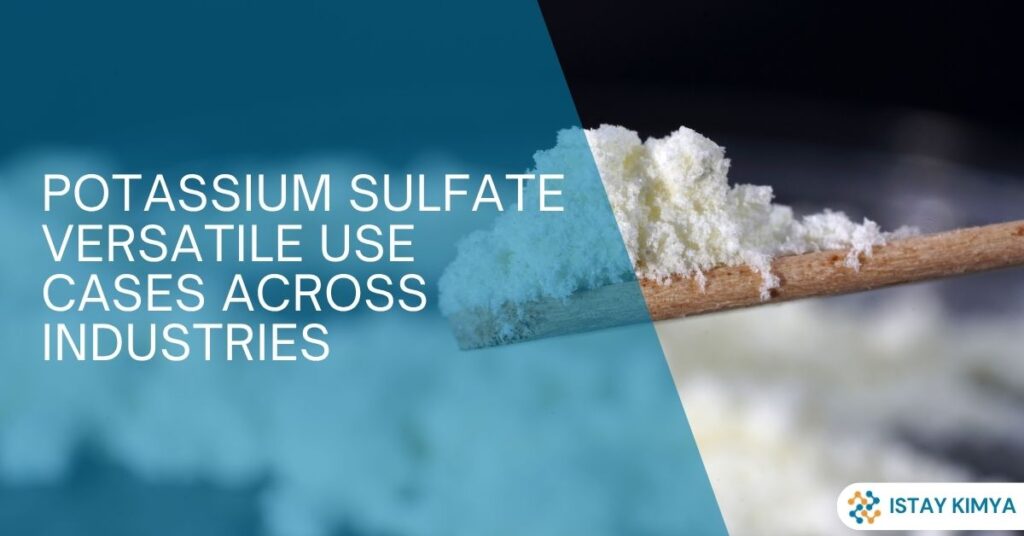
Potassium sulfate, also known as sulfate of potash (SOP), is a vital inorganic compound with the formula K2SO4. It’s widely used for its dual nutrient composition of potassium and sulfur. As an odorless, white crystalline salt, potassium sulfate is water-soluble and highly efficient in delivering essential minerals to plants and industrial formulations.
Table of Contents
- Chemical Composition and Properties
How Potassium Sulfate is Manufactured
Potassium Sulfate in Agriculture
Benefits of Potassium Sulfate for Crops
Using Potassium Sulfate in Hydroponics
Industrial Applications of Potassium Sulfate
Role in Chemical Manufacturing
Use in Pharmaceuticals
Environmental and Safety Considerations
Economic Benefits and ROI
How Different Industries Use Potassium Sulfate
Comparison with Other Potassium Fertilizers
Best Practices for Storage and Handling
Frequently Asked Questions
Chemical Composition and Properties
- Chemical Formula: K2SO4
- Appearance: White, crystalline solid
- Solubility: Soluble in water; insoluble in alcohol
- pH: Neutral to slightly alkaline
Its lack of chloride makes it ideal for chloride-sensitive crops and manufacturing processes.
How Potassium Sulfate is Manufactured
Potassium sulfate can be produced through:
- Mannheim Process: Reacting potassium chloride with sulfuric acid.
- Langbeinite Processing: Extracting from naturally occurring minerals.
- Electrolysis Methods: Rarely used, but feasible for high-purity applications.
Each method affects the product’s purity, cost, and environmental impact.
Potassium Sulfate in Agriculture
Agriculture is the largest consumer of potassium sulfate. It is especially critical for:
- Chloride-sensitive crops like tobacco, potatoes, and fruits.
- Enhancing nutrient uptake efficiency.
- Improving drought resistance and overall plant health.
Benefits of Potassium Sulfate for Crops
- Boosts Root Development
- Enhances Fruit Quality
- Improves Disease Resistance
- Facilitates Enzyme Activation
- Increases Shelf Life of Produce
These benefits are indispensable for high-value crops.
Using Potassium Sulfate in Hydroponics
Hydroponic systems rely on precision nutrients. Potassium sulfate:
- Delivers potassium without chloride contamination
- Maintains stable pH levels
- Supports consistent growth cycles
It’s often blended with calcium and magnesium to create balanced nutrient solutions.
Industrial Applications of Potassium Sulfate
For the calcium side of a balanced formulation, our article on calcium nitrate in hydroponic nutrient solutions covers dosing, compatibility, and application guidance.
Outside agriculture, potassium sulfate plays a crucial role in industries such as:
- Glass Manufacturing: Improves strength and transparency
- Dye and Textile: Acts as a mordant
- Explosives: Used in controlled reactions
Its purity and reactivity make it versatile.
Role in Chemical Manufacturing
In chemical synthesis, K2SO4 is used:
- As a catalyst
- In buffering systems
- In production of potassium alum and other salts
It’s a staple in laboratories and industrial chemistry applications.
Use in Pharmaceuticals
Though less common, potassium sulfate contributes to pharmaceutical processes:
- As an excipient in certain formulations
- In pH adjustment
- In controlled-release mechanisms
Its neutral nature makes it a good fit for delicate compounds.
Environmental and Safety Considerations
Potassium sulfate is generally safe:
- Low toxicity
- Non-flammable
- Minimal environmental impact
However, safety measures include:
- Proper PPE when handling
- Avoiding direct inhalation
- Safe storage in dry conditions
Economic Benefits and ROI
Potassium sulfate offers economic benefits through:
- Increased crop yields
- Reduced loss due to disease
- Improved quality leading to better market prices
ROI in agriculture is especially pronounced in high-value crops like fruits and nuts.
How Different Industries Use Potassium Sulfate
Producers of high-value fruit crops frequently combine sulfate of potash with water-soluble calcium nitrate to support fruit firmness and reduce calcium-deficiency disorders.
| Industry | Application |
|---|---|
| Agriculture | Fertilizer, soil conditioner |
| Pharmaceuticals | Excipient, pH adjuster |
| Glass | Clarifying agent, strength enhancer |
| Textiles | Dye fixing, mordant |
| Chemicals | Catalyst, buffer, reagent |
This wide applicability explains its strong market demand.
Comparison with Other Potassium Fertilizers
| Fertilizer Type | Chloride Content | Use Case |
| Potassium Sulfate | None | Chloride-sensitive crops |
| Potassium Chloride | High | General fertilizer |
| Potassium Nitrate | Low | High-nitrogen demand crops |
Potassium sulfate stands out for quality and safety.
Best Practices for Storage and Handling
For programs that must supply nitrogen alongside potassium, review our guide to potassium nitrate for high nitrogen-demand crops.
- Store in moisture-free, well-ventilated areas
- Use sealed containers to prevent clumping
- Label containers clearly
- Train staff in chemical safety protocols
These practices ensure product integrity and safety.
Frequently Asked Questions
1. What is potassium sulfate mainly used for?
Primarily as a fertilizer in agriculture, especially for crops sensitive to chloride.
2. Is potassium sulfate safe for organic farming?
Yes, if it meets specific purity and sourcing standards.
3. How does potassium sulfate compare to potassium chloride?
Potassium sulfate is chloride-free and better for sensitive crops, though slightly costlier.
4. Can potassium sulfate be used in hydroponic systems?
Yes, it’s a preferred potassium source in hydroponic nutrient mixes.
5. Does potassium sulfate expire?
It does not expire but must be stored properly to maintain efficacy.
Explore, try, or buy potassium sulfate here: Potassium Sulfate Product Page
