



Other Names:
1,2-Propanediol, PG, Propane-1,2-diol, Methyl Ethylene Glycol
Specification Summary
- Purity: ≥99.5% (technical grade), ≥99.9% (USP/EP grade)
- Form: Colorless, viscous, hygroscopic liquid
- CAS No.: 57-55-6
- Molecular Formula: C₃H₈O₂
- Molecular Weight: 76.10 g/mol
Product Description
Propylene Glycol (PG) is a colorless, odorless, viscous liquid with a slightly sweet taste. It is highly hygroscopic, absorbing moisture from the air, and fully miscible with water, alcohols, and many organic solvents. PG is non-corrosive, non-alkaline, and exhibits low toxicity, making it safe for use in food, pharmaceutical, and cosmetic applications. Its low freezing point (-60°C) and high boiling point (188°C) ensure stability across extreme temperatures.
Propylene Glycol Specification Table
| Property | Value/Range | Test Method/Notes |
| Appearance | Colorless, viscous liquid | Visual |
| Color (Hazen) | ≤10 | ASTM D1209 |
| Specific Gravity (20°C) | 1.03–1.04 | ASTM D4052 |
| Refractive Index (20°C) | 1.429–1.435 | ASTM D1218 |
| Moisture Content | ≤0.2% | Karl Fischer titration |
| Freezing Point | -60°C | ASTM D1177 |
| Boiling Point | 188°C | At 760 mmHg |
| Viscosity (25°C) | 56 mPa·s | ASTM D445 |
| pH (5% solution) | 6–8 | |
| Flash Point (Closed Cup) | 99°C | ASTM D93 |
| Solubility in Water | Completely miscible |
Downloadable TDS:
A comprehensive Technical Data Sheet (TDS) is available for download, providing detailed mechanical, thermal, and electrical properties, as well as processing guidelines for polystyrene
Application Sectors and Industries of Propylene Glycol
Food & Beverage
PG acts as a humectant in baked goods, confections, and dairy products to retain moisture and extend shelf life. It stabilizes flavors and colors in beverages and prevents ice crystallization in frozen desserts.
Pharmaceuticals
Used as a solvent for oral and topical medications, PG enhances drug solubility and absorption. It serves as a preservative in vaccines and a carrier in cough syrups.
Antifreeze & Coolants
PG-based coolants protect automotive engines and HVAC systems from freezing (-60°C) and overheating. Its low toxicity makes it safer for residential and food-processing equipment.
Paints & Coatings
As a solvent and flow agent, PG ensures uniform pigment dispersion in water-based paints and printing inks. It improves drying time and reduces viscosity in industrial coatings.
Plastics & Resins
PG is a key component in unsaturated polyester resins for fiberglass-reinforced plastics. It acts as a plasticizer in PVC and polyurethane foams, enhancing flexibility.
Personal Care
In cosmetics, PG functions as a moisturizer in lotions, creams, and shampoos. It improves product texture, stabilizes emulsions, and enhances fragrance retention.
Textiles & Leather
PG serves as a dye carrier and softening agent in fabric processing. It prevents moisture loss in leather goods during tanning and storage.
Agriculture
Used in pesticide formulations, PG improves spray adhesion and efficacy. It is a non-toxic feed additive for livestock to enhance digestion and nutrient absorption.
Tobacco
PG maintains moisture in tobacco leaves, preventing brittleness during processing. It acts as a humectant in vaping liquids for consistent vapor production.
HVAC & Heat Transfer
PG-based heat transfer fluids regulate temperatures in solar heating systems and industrial chillers. Its thermal stability ensures efficient energy transfer.
Packaging Types
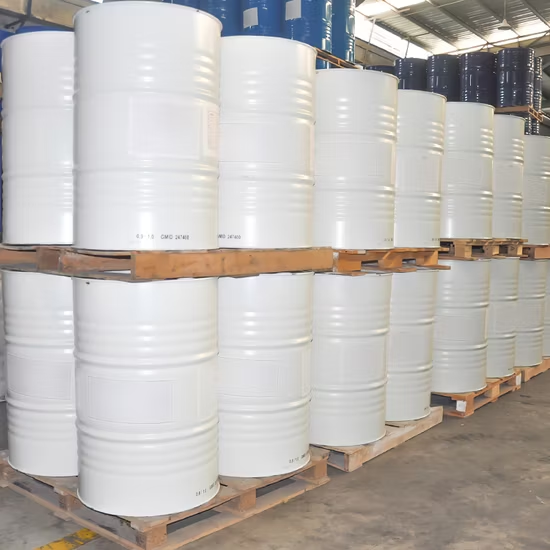
- 200–230 kg Drums: Steel or HDPE drums for secure storage and transport of liquid PG.
- IBC Totes (1,000 liters): Intermediate bulk containers for high-volume industrial users.
- Bulk Tankers: Insulated stainless-steel tankers for large-scale deliveries.
- Small Containers (5–25 liters): Sealed plastic cans for laboratory or specialty applications.
- ISO Tank Containers: For international shipments, compliant with global safety standards.
Propylene Glycol (PG) is a versatile, non-toxic chemical essential across industries for its solvent properties, thermal stability, and safety profile. For detailed technical specifications, safety protocols, and processing guidelines, request the downloadable TDS.