

resources
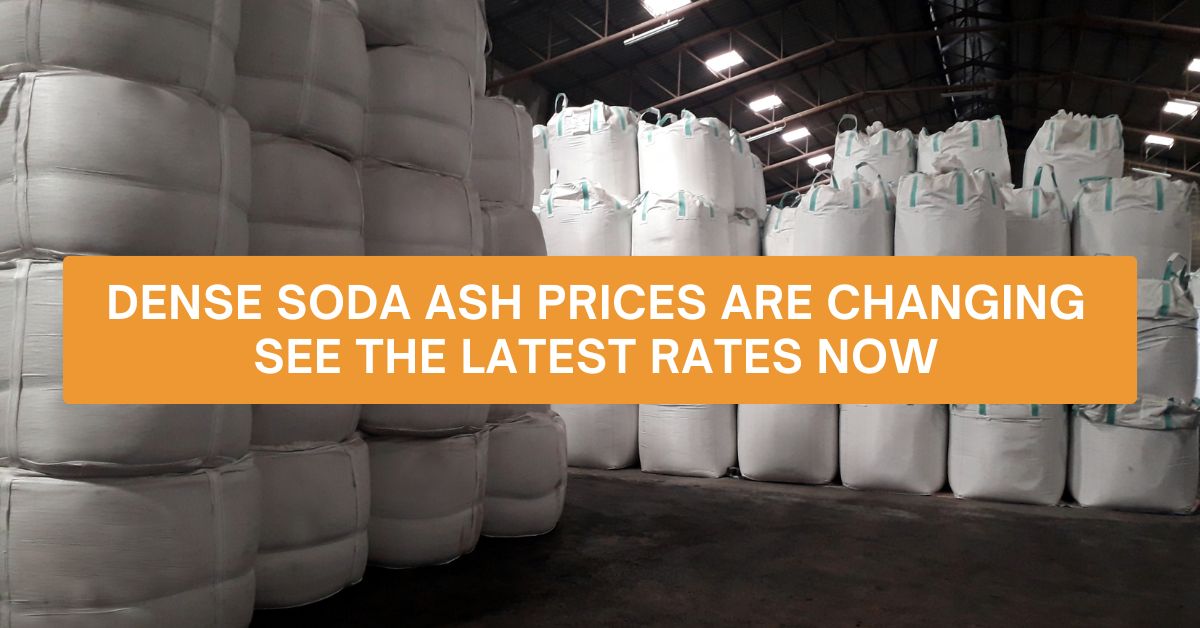
Dense Soda Ash Prices Are Changing – See the Latest Rates Now
Aug
Dense soda ash, chemically known as sodium carbonate (Na₂CO₃), is a cornerstone raw material for multiple industrial sectors, ranging from glass manufacturing and detergents to metallurgy, pulp and paper, and water treatment. With recent fluctuations in global supply chains, raw material costs, and energy markets, dense soda ash prices have been showing notable changes — and staying informed is essential for cost-effective procurement.
This article provides a detailed look into the factors influencing dense soda ash pricing, current market trends, and considerations for securing a stable, high-quality supply. It also explains the technical and commercial significance of dense soda ash and why reliable sourcing is critical for operational stability.
Understanding Dense Soda Ash
Dense soda ash is the anhydrous, granular form of sodium carbonate. It is chemically identical to light soda ash but differs in density and particle size. While light soda ash is a fine powder, dense soda ash is compact and less dusty, making it particularly suited for high-volume, continuous industrial processes.
Key Properties of Dense Soda Ash:
- Chemical Formula: Na₂CO₃
- Bulk Density: Typically 1.0–1.1 g/cm³ (denser than light soda ash)
- Solubility: Highly soluble in water, forming an alkaline solution
- Appearance: White, granular, free-flowing particles
Advantages Over Light Soda Ash:
- Reduced dusting, improving workplace safety and reducing material loss.
- Higher bulk density allows for reduced storage volume and more efficient handling.
- Better flow characteristics in automated feed systems.
Industrial Applications and Importance
Dense soda ash is integral to numerous industries because of its chemical versatility. Here’s a breakdown of its major uses:
Glass Manufacturing
For a sector-by-sector look at consumption patterns in glass, detergents, metallurgy, and water treatment, read our analysis of the dense soda ash applications driving global demand.
Dense soda ash is a primary fluxing agent in glass production, lowering the melting point of silica. This reduces energy consumption and improves furnace efficiency. It is used in:
- Container glass (bottles and jars)
- Flat glass (windows, mirrors)
- Specialty glass (optical and laboratory glass)
Detergents and Cleaning Products
It serves as a builder in detergents, enhancing cleaning performance by softening water and regulating pH.
Pulp and Paper Industry
Dense soda ash helps in pulping processes, bleaching, and pH control in paper production.
Metallurgy
In non-ferrous metallurgy, soda ash assists in removing impurities and refining ores.
Water Treatment
It is used to adjust pH and alkalinity in municipal and industrial water treatment plants.
Why Prices Are Changing Now
Dense soda ash prices are influenced by a combination of global and regional market factors. Current price movements are being shaped by the following:
Energy Costs
Soda ash production is energy-intensive, particularly for producers using the Solvay process. Rising natural gas and electricity costs directly impact production expenses.
Raw Material Availability
Key inputs like limestone and brine must be available in consistent quality and volume. Disruptions in mining or transportation can raise costs.
Global Supply-Demand Balance
A surge in demand from glass manufacturing, especially in construction and packaging sectors, has tightened supply in some markets.
Logistics and Freight Rates
International shipping costs have fluctuated sharply in recent years, affecting the landed cost for importers.
Currency Fluctuations
Because dense soda ash ships at roughly 1.0–1.1 g/cm³, container utilization differs markedly between grades. Our technical overview explains how bulk density affects freight cost per tonne.
For buyers in countries importing soda ash, exchange rate volatility can significantly alter purchase prices.
Latest Price Trends
While prices vary by region, recent market data indicates:
- Moderate upward trends in Europe and the Middle East due to higher energy costs.
- Stable to slightly increased prices in Asia, driven by steady glass sector demand.
- Price competition in markets with higher local production capacity, which may temper increases.
Tip: Buyers with long-term contracts may currently be insulated from short-term volatility, but spot buyers are seeing faster price changes.
Technical Specifications and Quality Considerations
When procuring dense soda ash, focusing on consistent quality and reliable supply is just as important as price. Key specifications include:
- Na₂CO₃ Content: Typically ≥ 99.2% for industrial-grade material.
- Bulk Density: Consistent density ensures predictable feed rates.
- Particle Size Distribution: Uniform granulation reduces dust and handling issues.
- Moisture Content: Low moisture prevents caking and improves storage life.
Procurement Strategies in a Changing Price Environment
To mitigate the impact of price fluctuations, industrial buyers can adopt several strategies:
Long-Term Supply Contracts
Locking in prices through fixed-term contracts can provide budget stability, especially when prices are trending upward.
Regional Sourcing
If possible, sourcing from nearby producers can reduce exposure to global freight rate changes.
Inventory Management
Maintaining safety stock can help avoid emergency purchases at unfavorable prices.
Supplier Reliability
Working with established suppliers who have stable production capacity ensures uninterrupted supply during market disruptions.
Istay Kimya – Your Trusted Source from Turkey
For a structured evaluation framework covering quality documentation, logistics capability, and contract terms, see our guide to choosing a reliable dense soda ash supplier.
Turkey’s strategic location makes it an advantageous sourcing hub for dense soda ash and other industrial chemicals. Istay Kimya leverages this position to supply consistent, high-quality soda ash to global markets with competitive lead times and pricing.
Why Source from Istay Kimya:
- Proven track record in chemical raw material supply.
- Access to reliable production facilities and logistics networks.
- Quality assurance systems ensuring product consistency.
- Flexible delivery options tailored to operational needs.
Explore our Caustic Soda Flakes – another essential industrial chemical we supply.
Price Outlook for the Coming Months
Market analysts expect continued moderate upward pressure on dense soda ash prices in regions where:
- Energy costs remain high.
- Glass manufacturing demand is accelerating.
- Currency weakness increases import costs.
Conversely, stable or slightly declining prices may occur in markets with:
- Large domestic production capacity.
- Slower demand growth due to economic factors.
Best Practices for Industrial Use
When handling and storing dense soda ash:
- Store in a dry, well-ventilated area to avoid caking.
- Use sealed, moisture-resistant containers.
- Employ dust control measures during transfer to protect worker health.
- Ensure equipment compatibility with granular feed materials.
FAQs
- Q1: What is the difference between dense soda ash and light soda ash?
Dense soda ash has a higher bulk density and is granular, making it better suited for glass manufacturing and automated handling, whereas light soda ash is fine and more prone to dusting. - Q2: How should dense soda ash be stored for long-term use?
It should be stored in a dry, sealed container in a moisture-free environment to prevent caking and maintain flow properties. - Q3: What factors most influence soda ash prices globally?
Energy costs, raw material availability, supply-demand balance, freight rates, and currency fluctuations are key drivers. - Q4: Can dense soda ash be substituted with light soda ash in all applications?
Not always. While chemically identical, their physical forms make them more suited to different processing and handling requirements.
