

resources
Sodium Methoxide: Industrial Applications & Benefits
Jul
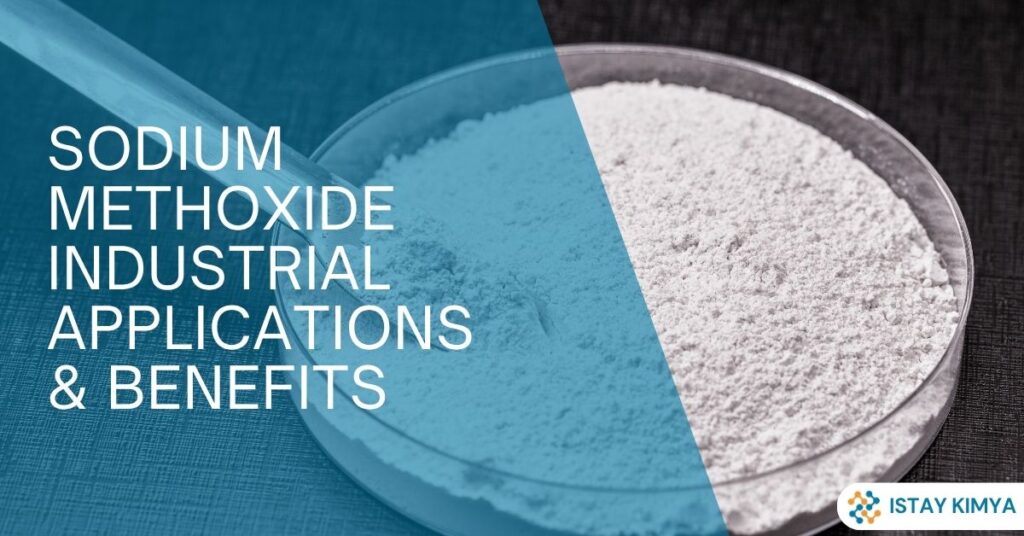
Sodium Methoxide, also known as sodium methylate, is a white, crystalline powder with the chemical formula CH₃ONa. It is widely used as a strong base and nucleophile in various chemical reactions. Its versatility makes it valuable across multiple industries, including pharmaceuticals, agrochemicals, biodiesel production, and more
Table of Contents
- Chemical Properties and Structure
- Production Methods
- Role in Biodiesel Production
- Applications in the Pharmaceutical Industry
- Use in Agrochemical Manufacturing
- Function in Polymer and Plastic Industries
- Application in Dye and Pigment Production
- Role in Fragrance and Flavor Industries
- Use in Analytical Chemistry
- Safety and Handling Precautions
- Storage and Stability
- Environmental Impact and Regulations
- Comparison with Other Catalysts
- Frequently Asked Questions (FAQs)
Chemical Properties and Structure
-
Molecular Formula: CH₃ONa
-
Molar Mass: 54.02 g/mol
-
Appearance: White crystalline powder
-
Melting Point: 127°C
-
Solubility: Reacts with water; soluble in methanol and ethanol
Sodium Methoxide is an ionic compound composed of a sodium cation (Na⁺) and a methoxide anion (CH₃O⁻). Its strong basicity and nucleophilicity make it an effective catalyst and reagent in organic synthesis.
Sodium methoxide is one of several sodium-based chemicals procured for industrial synthesis. For a comparison of related products and their specifications, see our industrial sodium chemicals buyer’s guide.
Production Methods
Sodium Methoxide is typically produced by reacting metallic sodium with methanol:
2Na + 2CH₃OH → 2CH₃ONa + H₂↑
This reaction is highly exothermic and must be conducted under controlled conditions to prevent hazards.
Role in Biodiesel Production
One of the primary applications of Sodium Methoxide is in the production of biodiesel. It acts as a catalyst in the transesterification process, where triglycerides react with methanol to form methyl esters (biodiesel) and glycerol.
Advantages:
-
High catalytic efficiency
-
Faster reaction rates
-
Lower reaction temperatures
-
Improved biodiesel yield
Compared to other catalysts like sodium hydroxide, Sodium Methoxide offers better performance and fewer side reactions.
If your process also consumes sodium hydroxide, our guide to caustic soda flake uses and specifications explains how to verify product quality before purchase.
Applications in the Pharmaceutical Industry
In pharmaceuticals, Sodium Methoxide is used as a reagent and catalyst in the synthesis of various drugs, including:
-
Vitamin A1 and B1
-
Sulfadiazine
-
Trimethoprim
Its role in deprotonation and methylation reactions makes it valuable in creating complex organic molecules.
Use in Agrochemical Manufacturing
Sodium Methoxide is instrumental in producing agrochemicals such as pesticides and herbicides. It facilitates the formation of active ingredients through condensation and methylation reactions, contributing to effective crop protection solutions.
Function in Polymer and Plastic Industries
In polymer chemistry, Sodium Methoxide initiates anionic polymerization reactions, particularly with ethylene oxide, leading to the formation of polyether chains. These polymers are essential in manufacturing plastics, resins, and elastomers with specific properties.
Application in Dye and Pigment Production
The dye industry utilizes Sodium Methoxide in synthesizing various dyes and pigments. It aids in forming azo compounds and other chromophores, which are crucial for producing vibrant and stable colors in textiles and inks.
Role in Fragrance and Flavor Industries
Sodium Methoxide is employed in the synthesis of aroma compounds and flavoring agents. Its ability to catalyze methylation reactions helps in creating esters and ethers that contribute to desired scents and tastes in consumer products.
Use in Analytical Chemistry
In analytical laboratories, Sodium Methoxide serves as a reagent for titrations and sample preparations. It is used in determining the acid number and saponification value of fats and oils, providing insights into their quality and composition.
Safety and Handling Precautions
Due to its reactive nature, Sodium Methoxide must be handled with care:
-
Avoid contact with water and moisture
-
Store under inert atmosphere
-
Use appropriate personal protective equipment (PPE)
-
Ensure proper ventilation in work areas
Exposure can cause severe skin burns and eye damage. Inhalation or ingestion is hazardous and requires immediate medical attention.
Storage and Stability
Sodium Methoxide should be stored in tightly sealed containers, away from moisture and air. It is stable under recommended storage conditions but can decompose upon exposure to water, releasing methanol and sodium hydroxide.
Many facilities handle sodium hydroxide in solution form as well. Our summary of liquid caustic soda use cases outlines typical applications and handling considerations for bulk buyers.
Environmental Impact and Regulations
While Sodium Methoxide is effective in industrial applications, its environmental impact must be considered:
-
Proper disposal of waste and by-products is essential
-
Compliance with local and international regulations is mandatory
-
Environmental agencies classify it as hazardous, necessitating controlled handling and disposal
Comparison with Other Catalysts
When compared to other alkaline catalysts like sodium hydroxide (NaOH) and potassium hydroxide (KOH), Sodium Methoxide offers:
-
Higher Efficiency: Faster reaction rates and higher yields
-
Lower Side Reactions: Reduced soap formation in biodiesel production
-
Better Solubility: Enhanced mixing with methanol
These advantages make it a preferred choice in various chemical processes.
Frequently Asked Questions (FAQs)
Q1: What is the primary use of Sodium Methoxide?
A1: Sodium Methoxide is primarily used as a catalyst in biodiesel production and as a reagent in pharmaceutical and agrochemical synthesis.
Q2: How should Sodium Methoxide be stored?
A2: It should be stored in airtight containers under an inert atmosphere, away from moisture and air, to prevent decomposition.
Q3: Is Sodium Methoxide hazardous?
A3: Yes, it is highly reactive and can cause severe burns upon contact. Proper safety measures and protective equipment are essential when handling it.
Q4: Can Sodium Methoxide be used in food applications?
A4: While it is used in the synthesis of certain food additives, direct use in food products is not recommended due to its caustic nature.
Q5: How does Sodium Methoxide compare to Sodium Hydroxide in biodiesel production?
A5: Sodium Methoxide offers higher efficiency, faster reaction rates, and fewer side reactions compared to Sodium Hydroxide, making it more suitable for biodiesel production.
For more information or to purchase Sodium Methoxide, visit Istay Kimya’s product page.
