

resources
What Is Dense Soda Ash and Why It’s Essential for Multiple Industries
Aug
Dense soda ash, chemically known as sodium carbonate (Na₂CO₃), is a high-purity, white, odorless, and granular alkaline compound widely used across numerous industries. It is produced either through natural mineral extraction from trona ore or via synthetic processes such as the Solvay process.
While soda ash exists in different grades — primarily light soda ash and dense soda ash — the dense form is physically heavier and coarser, making it ideal for industrial processes where bulk handling efficiency, reduced dust, and high volumetric efficiency are critical.
The “dense” designation refers to its higher bulk density (typically around 1 g/cm³), which allows more material to be stored and transported in a given volume, providing economic and operational benefits to manufacturers.
How Dense Soda Ash Differs from Light Soda Ash
Both dense and light soda ash have the same chemical composition, but their physical characteristics differ due to processing:
| Property | Dense Soda Ash | Light Soda Ash |
| Bulk Density | 0.95–1.06 g/cm³ | 0.5–0.6 g/cm³ |
| Particle Size | Coarse, granular | Fine, powdery |
| Main Uses | Glass, metallurgy, detergents | Chemical production, pulp & paper |
| Handling | Low dust, ideal for pneumatic conveying | Higher dust, easier to dissolve |
Key differences explained:
- Bulk density advantage: Dense soda ash requires less storage space per metric ton.
- Dust reduction: The coarse granules reduce airborne particles, improving workplace safety and cleanliness.
- Feeding efficiency: Ideal for automated handling systems in large-scale manufacturing.
Selecting between grades depends on your handling systems and end use. Our comparison of soda ash dense vs light: which grade to choose breaks down the trade-offs for procurement teams.
Global Production and Supply Sources
Dense soda ash production occurs mainly in the United States, China, Turkey, India, and parts of Africa.
Turkey, in particular, is emerging as a strategic global supplier thanks to abundant trona reserves and advanced production facilities. Suppliers like Istay Kimya play a crucial role in exporting high-quality dense soda ash to international markets.
Global consumption is dominated by industries requiring high purity, uniform granulation, and reliable bulk delivery — conditions where dense soda ash outperforms lighter grades.
Key Industrial Applications of Dense Soda Ash
Dense soda ash is essential in processes where alkalinity, sodium ions, and bulk handling properties are critical. Below are the major sectors that depend on it:
Glass Manufacturing
Beyond the sectors above, the industrial uses of dense soda ash extend into processes where its density and low dust deliver measurable efficiency gains.
- Primary use: Glass production accounts for over 50% of global soda ash demand.
- Function: Acts as a flux to lower the melting temperature of silica (SiO₂), reducing energy costs and improving furnace efficiency.
- Applications:
- Container glass: Bottles, jars, and packaging.
- Flat glass: Windows, automotive windshields, architectural panels.
- Specialty glass: Laboratory equipment, cookware, solar panels.
- Dense soda ash advantage: Coarse granules flow easily in batch mixing systems and ensure consistent glass quality.
Detergents and Cleaning Agents
- Function: Serves as a builder to soften water, improve surfactant efficiency, and maintain alkaline pH.
- Applications:
- Laundry powders and tablets.
- Industrial cleaning compounds.
- Why dense grade is preferred: Lower dust generation improves working conditions in high-speed detergent plants.
Metallurgy and Mining
- Function: Used as a flux in non-ferrous metallurgy (e.g., aluminum, lead, and zinc smelting).
- Applications:
- Neutralizing acidic mine drainage.
- Adjusting pH in mineral processing.
- Benefit: Coarse granules are easier to feed into high-temperature furnaces without excessive dust losses.
Pulp and Paper
- Function: Acts as a pH regulator in pulping processes and as part of the chemical recovery cycle in Kraft pulp mills.
- Benefit: Dense form reduces dust contamination and is easier to handle in bulk conveyors.
Chemical Manufacturing
- Function: Provides a sodium source for producing sodium silicates, sodium phosphates, and other compounds.
- Application Examples:
- Dyes and pigments.
- Adhesives and sealants.
- Water treatment chemicals.
- Advantage: Reliable bulk density ensures consistent chemical dosing.
Environmental Applications
- Function: Used in flue gas desulfurization (FGD) to remove sulfur dioxide from industrial emissions.
- Benefit: Dense soda ash’s granular form makes it suitable for pneumatic feeding systems in large-scale power plants.
Technical Specifications of Dense Soda Ash
While exact specifications vary by supplier, typical industrial-grade dense soda ash has the following parameters:
| Parameter | Typical Value |
| Na₂CO₃ content | ≥ 99.2% |
| Bulk density | 0.95–1.06 g/cm³ |
| Moisture content | ≤ 0.15% |
| Particle size | 0.25–0.80 mm (90% min) |
| Insoluble matter | ≤ 0.05% |
High-purity grades are especially critical for glass and food-grade chemical production, where impurities could affect quality.
Benefits of Choosing Dense Soda Ash in Industrial Processes
- Higher Storage and Transport Efficiency
With nearly double the bulk density of light soda ash, dense soda ash allows for reduced warehouse space and lower shipping costs per ton.
- Reduced Dust Hazards
The granular form significantly lowers airborne dust, improving worker safety and reducing dust-related equipment maintenance.
- Improved Process Efficiency
Dense granules feed evenly into continuous industrial systems, minimizing flow interruptions and ensuring consistent chemical reactions.
- Better Environmental Performance
Less dust also means lower fugitive emissions in production and handling facilities.
Packaging and Logistics Considerations
Dense soda ash is typically shipped in:
- 25 kg bags (laminated PP bags with inner PE liner) for smaller-scale use.
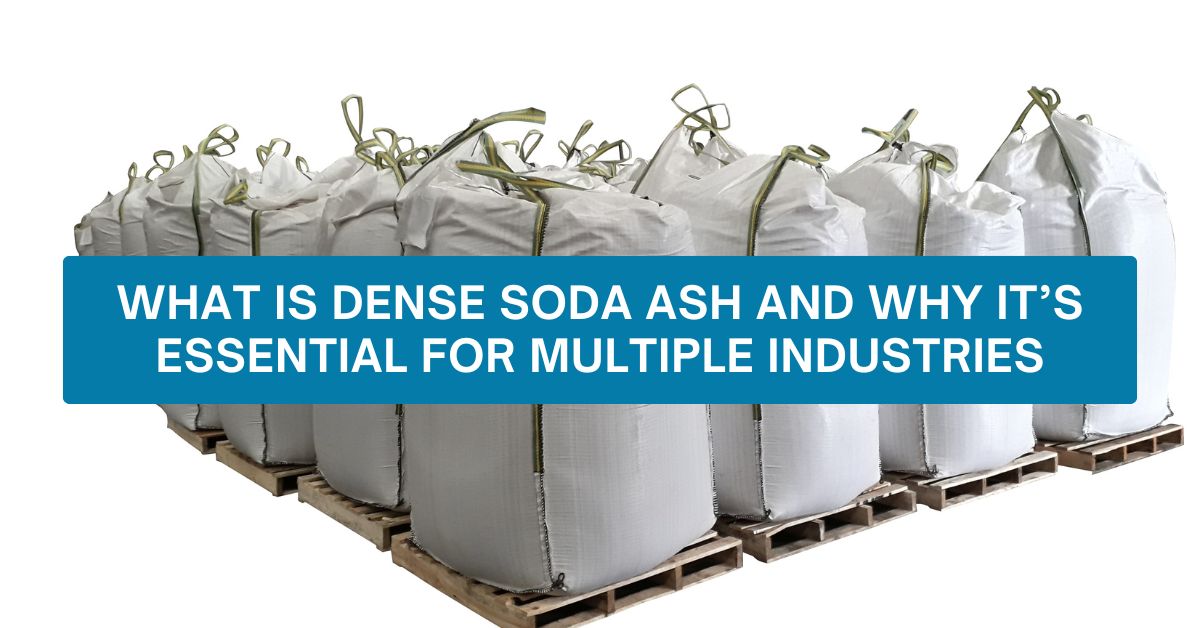
- 1,000–1,250 kg big bags for bulk industrial consumers.
- Bulk tanker trucks or railcars for very high-volume users.
When sourcing dense soda ash, reliable logistics and consistent packaging integrity are essential to prevent moisture absorption and contamination.
Quality, Safety, and Handling Guidelines
Sound storage practice starts with understanding the material itself. Review the dense soda ash hazards and safe handling requirements before finalizing your PPE and warehousing protocols.
- Storage: Keep in dry, well-ventilated areas away from acids.
- Handling: Use pneumatic conveying systems or mechanical conveyors for large-scale operations.
- Safety: Although not hazardous under normal conditions, soda ash is alkaline and can irritate skin, eyes, and respiratory systems — PPE is recommended.
Global Market Trends and Supply Security
Demand for dense soda ash is growing steadily, driven by:
- Expanding construction and automotive glass markets.
- Rising use in renewable energy technologies like solar glass.
- Increasing detergent consumption in developing economies.
However, supply security can be affected by:
- Export regulations in major producing countries.
- Freight cost fluctuations.
- Seasonal demand spikes.
Strategic sourcing from established Turkish suppliers ensures consistent quality and delivery schedules.
Why Source Dense Soda Ash from Turkey
Freight and demand shifts make budgeting difficult without current data. Track the latest dense soda ash price trends to time procurement decisions against volatile market conditions.
Turkey is one of the world’s most competitive and high-quality producers of dense soda ash, benefiting from:
- Abundant natural trona deposits ensuring sustainable supply.
- Modern production technology for consistent particle size and purity.
- Strategic logistics hubs enabling fast shipment to Europe, the Middle East, Africa, and Asia.
Country of origin is only one factor in the decision. Our guide to choosing a dense soda ash supplier covers the certifications, logistics, and quality checks that protect your supply chain.
Frequently Asked Questions (FAQ)
- Is dense soda ash interchangeable with light soda ash in all applications?
Chemically yes, but physically no. The choice depends on handling requirements and process needs. Dense soda ash is preferred in bulk glass manufacturing, while light soda ash is better for chemical synthesis and applications requiring faster dissolution. - How is dense soda ash different from caustic soda?
Dense soda ash (Na₂CO₃) is a carbonate, while caustic soda (NaOH) is a hydroxide. Caustic soda is more caustic and reactive, used where stronger alkalinity is needed. - Does dense soda ash have a shelf life?
If stored properly in dry, sealed packaging, it remains stable for years. Moisture exposure can cause caking and reduce handling efficiency. - What is the role of dense soda ash in reducing industrial energy costs?
In glassmaking, it lowers silica’s melting point, reducing furnace temperatures and thus energy consumption.
